

Blue Marine Toys Sand Set
Blue Marine Toys Sand Set
SKU: SKU : 2270643 Vendor : Brault & Bouthillier
Regular price
289.95$
Regular price
0.00$
Sale price
289.95$
Unit price
per
Shipping calculated at checkout.
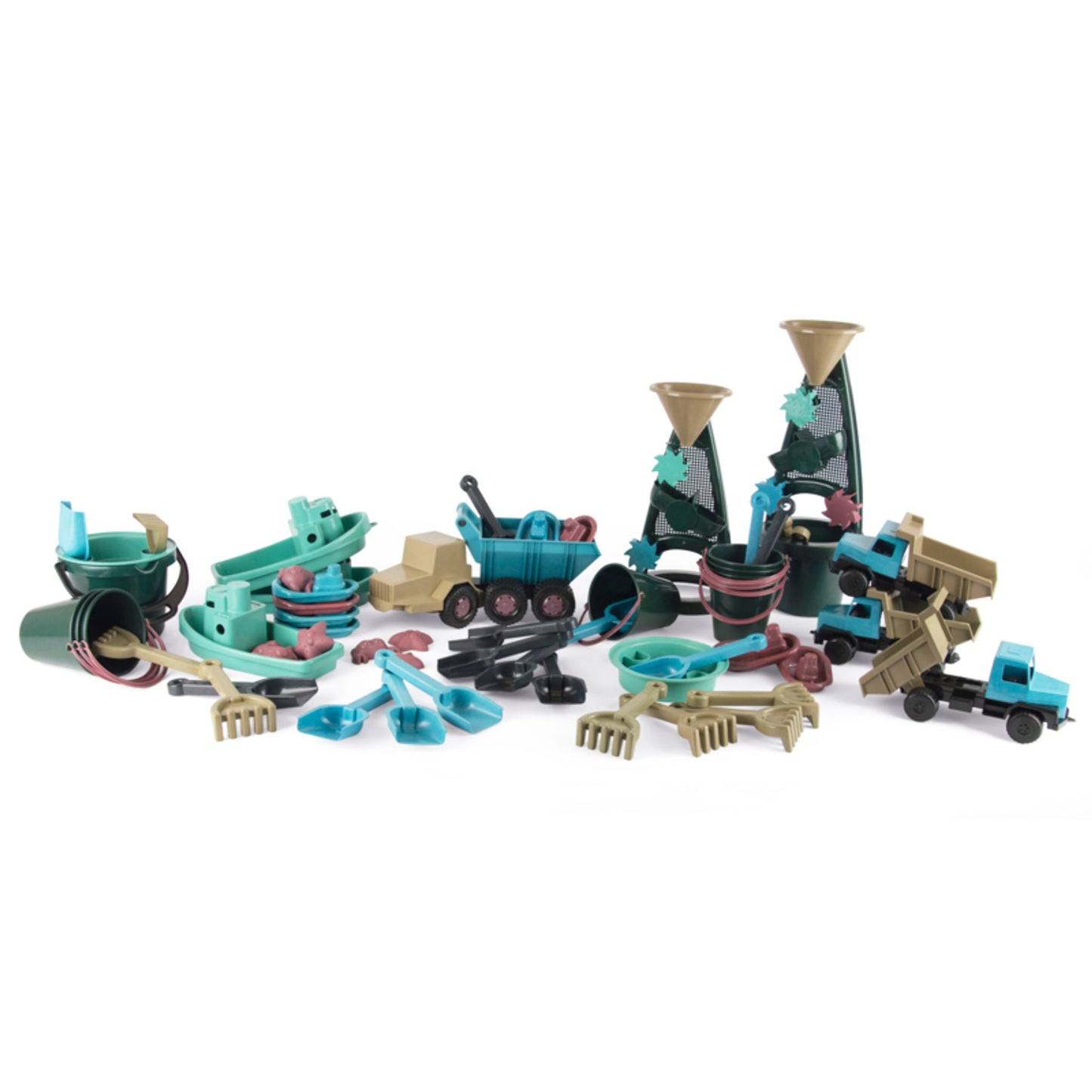
This comprehensive set includes 59 pieces for children to play and create together. Includes trucks, boats, mills, small shovels, weeders, sieves and buckets.
Dishwasher safe.
* As a verified institutional member, you benefit from special prices.
Log in to see the prices reserved for institutional members.
In stock
Couldn't load pickup availability

Creativity
Creativity is the ability to imagine, build and implement something new or to discover an original solution to a problem. It is, therefore, not limited to the arts alone and develops gradually from the age of 18 months. Given its importance in a child’s development, we should seize every opportunity to stimulate it daily. Indeed, a child who has learned to be creative will have good problem-solving and conflict-solving skills, expressing themselves, exploring and finding new ideas. All types of games and activities contribute to nurturing creativity. It is important to provide the child with a variety of materials that the child can explore and use as he or she pleases. In children’s games, an ordinary piece of fabric suddenly becomes a cape, a picnic mat, a blanket for dolls, and so much more! Books, nursery rhymes, dressing-up and improvisation games, for example, fuel the imagination in wonderful ways and inspire fun in the young and old alike.

Gross Motor Skills
Gross motor skills include balance, coordination, lateralization, strength, endurance, etc. Motor skills involve performing body movements and maintaining positions. Like all other skills, motor skills are acquired through practice, and repetition allows them to be refined and developed further. Motor activities and games promote spatial orientation and encourage children and adults alike to expend their energy in a positive way. The same activity often adapts well to children at different stages of development.

General Knowledge
Children are naturally curious and eager to learn. Anyone who has tried to answer a child's many questions can attest to this. Play is, therefore, a great tool for developing general knowledge. All you need to do is vary the material and create opportunities for learning by using books, question-and-answer games, picture books or thematic activities with the appropriate support material. All these activities allow children to take control of the world around them, broaden their horizons, awaken their interests, develop their curiosity and activate several cognitive processes. This also promotes their social and emotional development. By observing the activities and games that children engage in, you can find ideas for activities and themes related to their interests and whose content and difficulty level will be adapted to them.


