

Quebec Product
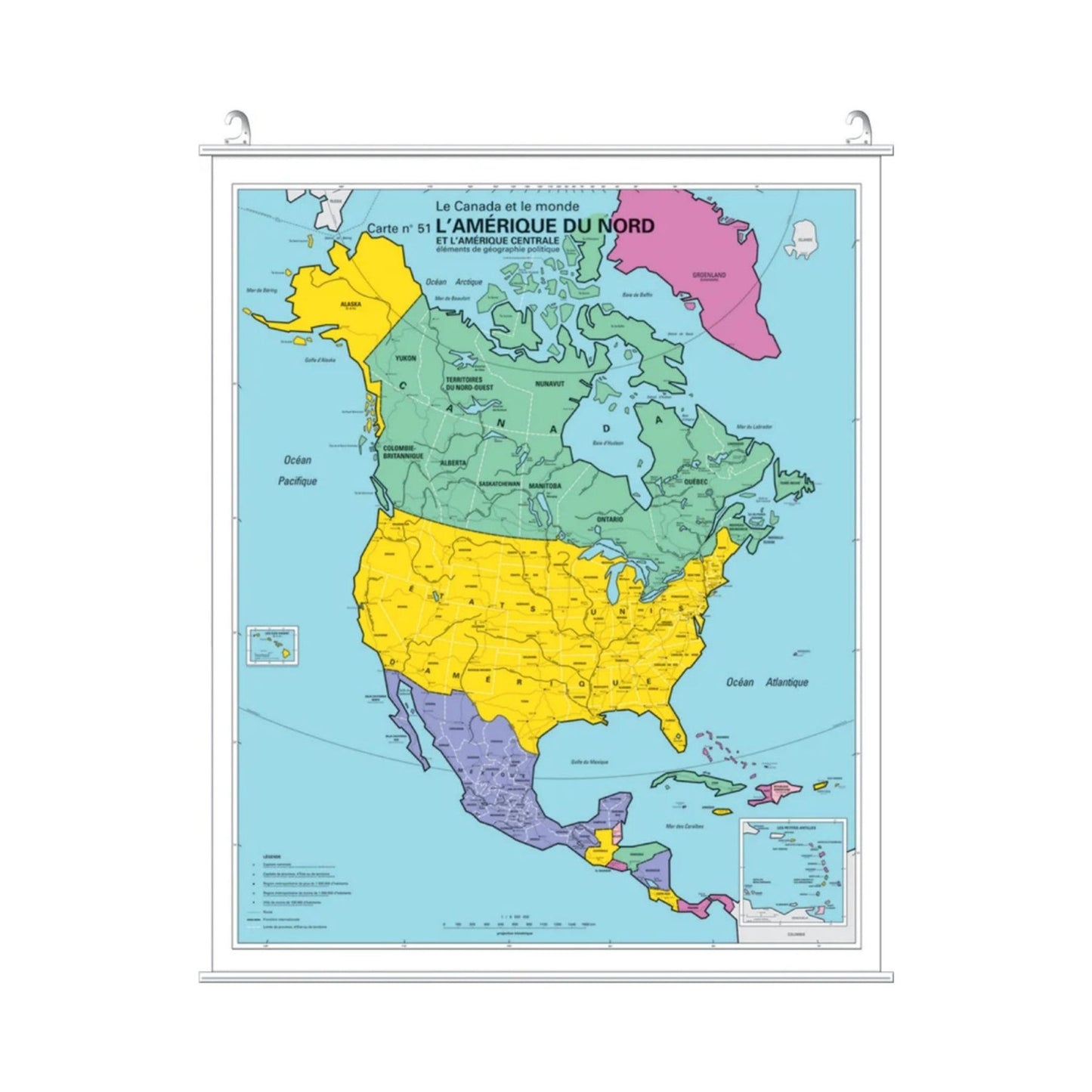
L'Amérique du Nord et l'Amérique centrale / carte politique
L'Amérique du Nord et l'Amérique centrale / carte politique
SKU: SKU : 4010641 Vendor : AMERIX
Regular price
309.00$
Regular price
0.00$
Sale price
309.00$
Unit price
per
Shipping calculated at checkout.
CARTE AMERI.NORD GEO.POL. CURS. 51
* As a verified institutional member, you benefit from special prices.
Log in to see the prices reserved for institutional members.
Highly popular item - Currently being restocked to better serve you.
Délais supplémentaires à prévoir
Ce produit est susceptible de nécessiter un délai d’approvisionnement additionnel. Pour toute question, veuillez contacter votre représentant ou le service à la clientèle:
Couldn't load pickup availability

Space-Time
Space and time are at the heart of children's daily activities: drawing, writing, moving a piece on a game board, putting together a puzzle or building a building, as well as identifying landmarks to get from one point to another. All of these call for spatial organization and orientation. Furthermore, telling a story, correctly ordering a sequence of events, learning the time, and carrying out an activity in a set amount of time all call for temporal organization and orientation. All of these concepts are gradually developed through various motor and cognitive skills. This is easily observed in the development of children's language when they use the words inside, outside, next to, behind, before, after, yesterday and tomorrow. In short, skills related to spatial and temporal organization impact several areas of children's development.

General Knowledge
Children are naturally curious and eager to learn. Anyone who has tried to answer a child's many questions can attest to this. Play is, therefore, a great tool for developing general knowledge. All you need to do is vary the material and create opportunities for learning by using books, question-and-answer games, picture books or thematic activities with the appropriate support material. All these activities allow children to take control of the world around them, broaden their horizons, awaken their interests, develop their curiosity and activate several cognitive processes. This also promotes their social and emotional development. By observing the activities and games that children engage in, you can find ideas for activities and themes related to their interests and whose content and difficulty level will be adapted to them.

Reading and Writing
Learning to identify written words and understanding their meaning is a major challenge for a 6-year-old child. Reading is a process that begins in first grade and is perfected throughout primary school. More than a visual decoding exercise involving knowledge of the alphabet and the ability to recognize words in general, reading requires that the child develop strategies to understand the meaning of the text. In addition, understanding texts is very important in learning all other school subjects. Producing a text calls upon several skills that must all be used simultaneously but which are gradually acquired during primary school through lessons in writing, spelling, grammar and punctuation.


