

SKU: SKU: 2135226
Regular price
15.95$
Regular price
Sale price
15.95$
Unit price
per
Shipping calculated at checkout.
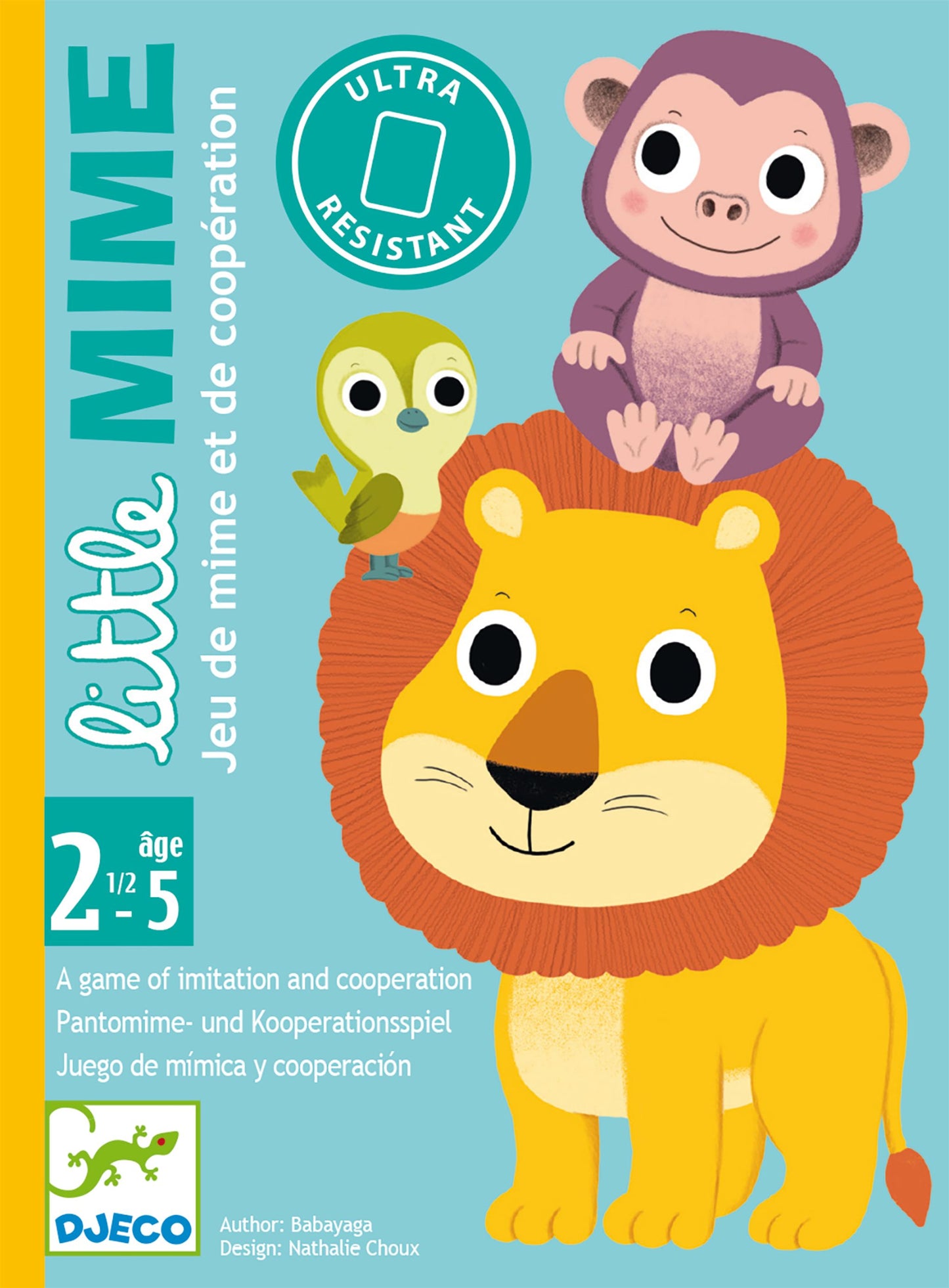
In this cooperative game with simple rules, players place baby animals on the table, then take turns imitating an animal's noise and gestures while the others try to guess which one it is. The goal is to save all animals. Also includes a competi ...
Show more
* As a verified institutional member, you benefit from special prices.
Log in to see the prices reserved for institutional members.
In stock - Limited quantities
Couldn't load pickup availability

Memory
Sensory, short-term, long-term: there are different types of memory, which all work together. Sensory memory very briefly retains the information gathered by the senses, just long enough to store it in short-term memory. Short-term memory then only lasts a few seconds, but it allows you to process and retain information to store it in long-term memory for days, months, or even your entire life to retain significant events, the meaning of words, manual skills, etc. If you want play and memory development in children to go hand-in-hand, remember this: observation is important for memory development. You must limit the amount of information that a child must retain at once and make connections between the game he or she is playing with you and his or her past experiences (a visit to the farm, a party, or a book, for example, exercises his or her long-term memory and can enrich the activity you are doing).

Observation
We ask children to exercise this skill every day in a multitude of activities. It is important to know that observation is never practiced alone: observing always requires concentration. This allows us to maintain attention while we gather information and commit it to our memory. How can we encourage the development of observation skills in children? First, it is important that the type of game and the difficulty level chosen are adapted to the child. The environment must be conducive to focus; it is essential to limit sources of distraction and to make the child comfortable. Guiding the child by asking questions can also help. To stimulate observation skills, we usually gravitate towards memory games, sorting games, sequence games or puzzles of all kinds, and that is great! But observation can also be practiced with all our senses. There are a variety of materials and activities that allow children to listen, touch, taste, look, smell, etc.


